
Is AI Quietly Costing Your Child Their Critical Thinking?
 By Tarush JainFounder, Brainwiz 7 min read

The short answer
It can, if AI does the thinking before your child does. Research links heavy AI use with weaker critical thinking, mainly because people stop doing the mental work themselves (“cognitive offloading”). The studies so far show a link, not proof that AI causes the decline. But the brain science behind it is well established: skills you stop practising fade. The fix is not banning AI. It is making sure your child thinks first, questions second, and asks AI third.
5757816.
That's the first phone number I ever memorised, back in the 90s. I won't tell you whose it is. But here's the uncomfortable part: in 2026, I have to open my phone to check my own mother's number.
If that sounds familiar, you've already felt what this article is about. Now imagine it happening not to a phone number, but to your child's ability to think through a problem.
“Use it or lose it”: what neuroscience says about unused skills
The brain keeps what it uses and lets go of what it doesn't. Neuroscientists call this “use it or lose it,” and it is one of the best-established principles of how the brain changes with experience.
The idea is closely tied to Michael Merzenich, a neuroscientist at the University of California, San Francisco, who spent decades showing that the brain stays plastic: it rewires itself through practice. In rehabilitation science it is written down as a formal rule. The widely cited Kleim and Jones (2008) framework lists it first: if you stop driving a specific brain function, that function degrades. The second principle is the hopeful one, “use it and improve it”: practise a function and it gets stronger.
Two more principles from the same framework matter for parents:
- Specificity. The brain strengthens the exact thing being practised. Reading a good answer trains reading. Producing an answer trains thinking.
- Age matters. Practice changes younger brains more readily. That cuts both ways: children gain the most from effortful thinking, and may have the most to lose by skipping it.
None of this was written about AI. But apply it to a child who hands every problem to ChatGPT before trying it, and the question is obvious. Which skill are they practising: thinking, or asking a machine to think?
What the research on AI and critical thinking actually found
Two studies get quoted most often. Both are worth knowing, and both are worth reading carefully.
Gerlich (2025), SBS Swiss Business School. Michael Gerlich surveyed 666 people in the UK and interviewed 50 of them, then published the results in the journal Societies in January 2025. He found that people who used AI tools more often scored lower on critical thinking. The link ran through cognitive offloading: the more people handed mental work to AI, the weaker their critical thinking. The finding most relevant to parents: the youngest group, aged 17 to 25, relied on AI the most and scored the lowest.
“Your Brain on ChatGPT” (2025), MIT Media Lab. Researchers tracked the brain activity of 54 university students with EEG while they wrote essays. One group used ChatGPT, one used Google, one used nothing. The no-tools group showed the strongest brain connectivity, search users came next, and ChatGPT users the weakest. ChatGPT users also felt the least ownership of their essays. The researchers named the effect “cognitive debt.”
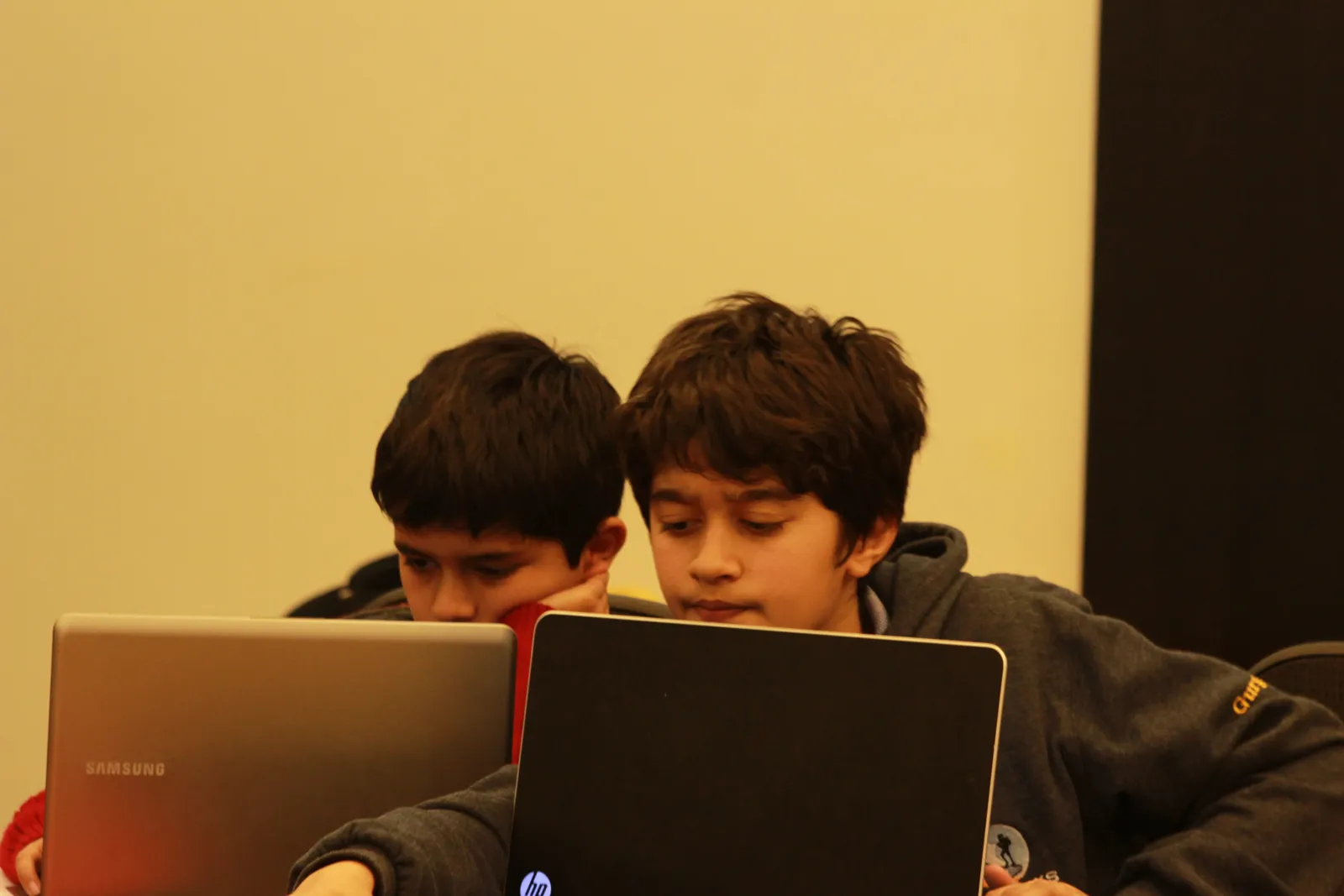
The most useful detail is in the MIT study's final session, where groups swapped. Students who had relied on ChatGPT and then wrote without it stayed under-engaged. Students who had written on their own first and then used ChatGPT showed stronger recall and brain activation. Same tool, opposite results. The order mattered more than the tool.
What these studies don't prove
In my reel I said this was “proven.” Here, with more room, I want to be precise.
- Gerlich's study shows correlation, not causation. It found that heavy AI use and weaker critical thinking go together. It did not show that one causes the other. Gerlich says so himself: other factors may be involved. It is also a survey of adults, not a study of school children.
- The MIT study is small and early. It had 54 participants (only 18 in the final session), covered one task (essay writing), and had not completed peer review when it was released. It does not show that ChatGPT damages the brain.
So the honest summary is this. We do not yet have proof that AI makes children worse thinkers. We do have well-established brain science that unused skills fade, plus early studies pointing the same way. For a parent, that is enough reason to make sure your child keeps doing the thinking, without panicking about the tool.
Better questions, not better prompts
I don't care how good your child is at prompting ChatGPT. Many parents measure that, and it's the wrong thing to measure.
Say your child types: “Write my history project on the Dandi March.” That isn't a prompting problem. It's a thinking problem. A better-worded prompt would get a better project, and your child would still have learned nothing.
The skill that matters comes before the prompt. Does your child know:
- What they are actually trying to find out?
- What they already know about it?
- What they are unsure about?
- What they should push back on in the answer?
Take two children with the same AI and the same assignment. One asks it to do the project. The other writes: “I think the three causes were X, Y and Z. Am I missing something?” Same technology. Completely different thinking.
This is also what the MIT result above suggests. The second child has already done the thinking, so the AI sharpens it instead of replacing it.
A child's questions tell you more about their thinking than the AI's answers ever will. The real skill for this generation is not getting better answers from AI. It is asking better questions of it.
The second question: a test you can run tonight

I'm often asked whether there are early signs, in children under 18, that predict who will do well. There is one I keep coming back to.
Remember when your child was younger? They asked you question after question. They repeated the same question, asked it different ways, and followed every answer with another “but why?”
Many children now ask one question and stop. That's because AI hands them a complete, well-formed answer, often with an opinion already attached. There's no gap left to make them curious, so there's no reason to ask a second question.
If you want one pattern to watch, watch for the second question. A child who follows up is a child who is still thinking.
Try it at dinner tonight: when your child asks you something, answer only halfway. Then wait. Do they ask a follow-up? Do they push back, or guess the rest? Or do they reach for the phone?
There's no score and nothing to fail. It just tells you whether the habit of following up is still alive.
What to do instead of counting screen time
Cutting AI out entirely isn't realistic, and it isn't the goal. Your child will use AI at school, at work and everywhere in between. The goal is that they use it as a sparring partner, not a replacement for their own brain. Three habits get you most of the way:
- The five-minute rule. Before your child opens AI for any problem, they try it on their own for five minutes. Let them struggle. That struggle is the “use it” in “use it or lose it,” and it matches what the MIT study saw: thinking first, then using AI, produced the strongest results.
- One question before the prompt. Before homework with ChatGPT, your child answers one question out loud: “What am I actually trying to find out?” If they can't answer it, they aren't ready to prompt.
- Protect the second question. At home, answer some questions halfway on purpose. Reward the follow-up more than the right answer.
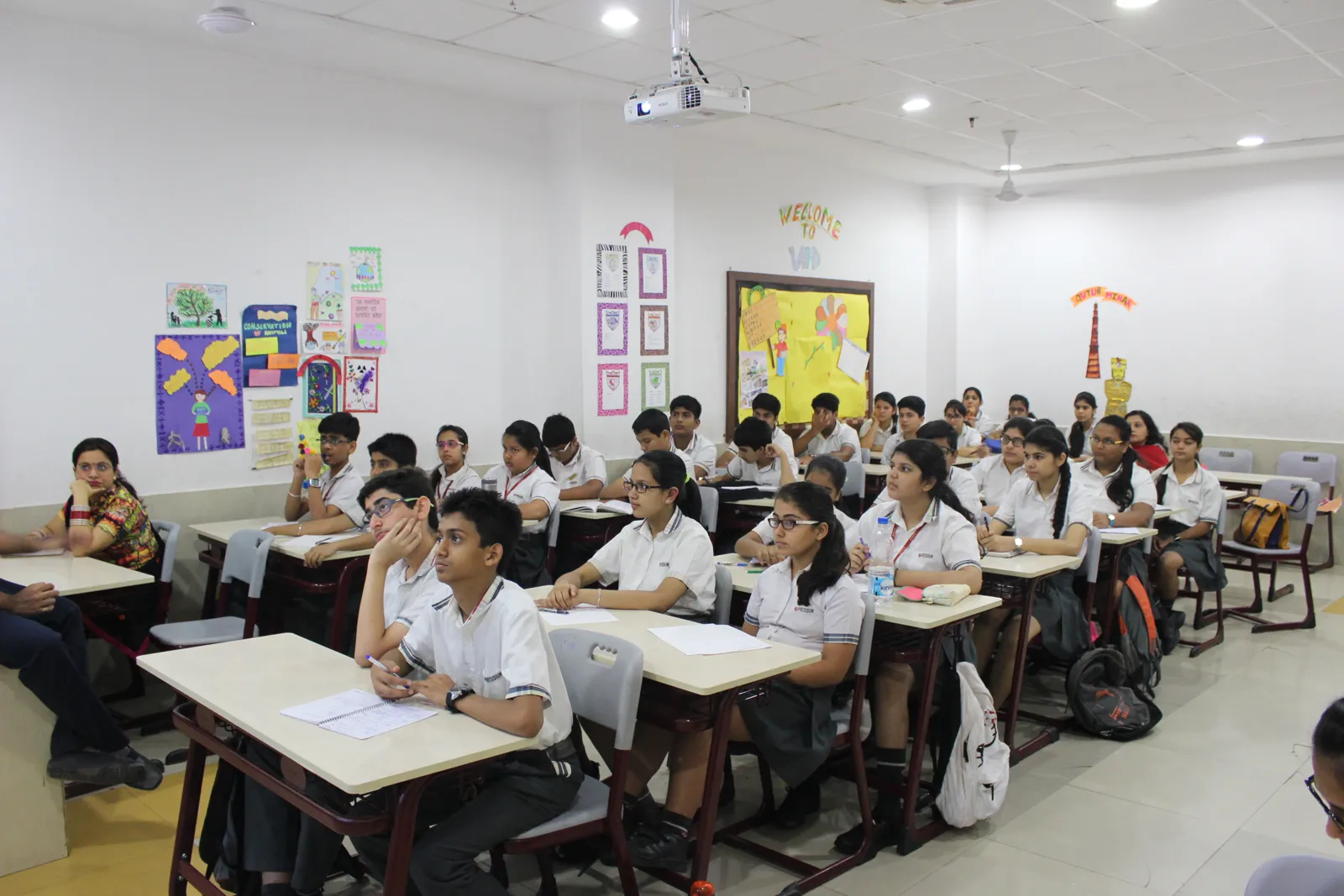
Screen-time limits measure how long your child uses AI. These habits change how they use it, and that is what decides whether their thinking gets stronger or weaker.
Frequently asked questions
Does using ChatGPT reduce children's critical thinking?
It can, if it replaces your child's own thinking. Studies link frequent AI use with weaker critical thinking, mainly through cognitive offloading. These studies show a link, not proof of cause, and most were done with adults. The safest approach is for children to attempt a problem themselves before using AI.
What is cognitive offloading?
Cognitive offloading means handing mental work to an outside tool, like using a calculator for sums or a phone to remember numbers. A little offloading is useful. Too much, for skills a child is still building, means those skills get less practice.
Should I stop my child from using AI for homework?
No. A ban is hard to enforce and leaves your child unprepared for a world full of AI. Set the order instead: your child tries first, writes down what they think, then uses AI to check, question or improve their answer.
At what age should children start using AI?
There is no settled research answer yet. Many AI tools set their own minimum ages in their terms, so check those first. Whatever the age, supervised use, where the child thinks first and an adult talks through the AI's answers with them, matters more than the exact starting point.
How can I tell if my child is over-relying on AI?
Watch three things. Do they try a problem before opening AI? Can they tell you what they were trying to find out? Do they ask follow-up questions, or accept the first answer? A child who stops asking second questions may be leaning on AI too much.
Is prompting a skill children need to learn?
Prompting helps, but it is the smaller skill. The bigger one is knowing what you want to find out, what you already know, and what to push back on. A child who can do that will write good prompts naturally.

About the author
Tarush Jain is the founder of Brainwiz, a New Delhi-based education organisation working on thinking and soft skills for school and college students. He has about 15 years of experience in education, spanning edtech, government skilling programmes, a multi-year engagement with UNESCO across seven countries and 200+ schools, and training work with the Indian Army and NCC. He writes about AI, parenting and children's thinking on Instagram at @iamtarushjain.
Sources
- Gerlich, M. (2025). AI Tools in Society: Impacts on Cognitive Offloading and the Future of Critical Thinking. Societies, 15(1), 6.
- PsyPost. AI tools may weaken critical thinking skills by encouraging cognitive offloading (includes Gerlich's correlation caveat).
- Kosmyna, N. et al. (2025). Your Brain on ChatGPT: Accumulation of Cognitive Debt when Using an AI Assistant for Essay Writing Task. MIT Media Lab, arXiv:2506.08872.
- LIRNEasia. Journal Club: Your Brain on ChatGPT (study limitations).
- Kleim, J. A. & Jones, T. A. (2008). Principles of Experience-Dependent Neural Plasticity. Journal of Speech, Language, and Hearing Research, 51.
- BrainHQ. Neuroscientist: brain is flexible (Michael Merzenich on brain plasticity).